
The short answer.
Pack to your chosen facility’s current checklist: a secure carrier, requested health records, clearly labelled food, accepted medicines in their required packaging, emergency contacts and permitted familiar belongings. Confirm what the provider supplies before adding bedding, bowls or litter. Send documents early enough for the business to review them.
Get the provider’s checklist before filling the bag
Ask for the checklist for cats at your specific branch and room category. Policies differ on food storage, toys, bedding, litter, medicines and document deadlines. Something useful at home may be impractical for a facility to clean, store or identify. Avoid arriving with a suitcase of items that the provider cannot accept.
Make two lists: documents to submit before arrival and items to bring on the day. Assign a simple label to each cat’s belongings if you are boarding more than one. Ask how items are returned and whether the carrier remains at the facility. Keep a copy of the checklist with your booking confirmation so changes can be checked before departure.
Prepare records and a one-page contact sheet
Send only the records the provider requests through its chosen channel, then ask it to confirm they are accepted. A sent email does not prove the admission file is complete. If a record is missing or a due date is close to the stay, speak to the provider and your veterinarian before making travel assumptions.
Your contact sheet should identify your cat, your reachable telephone number, a backup person, the usual veterinarian and the provider’s requested permissions. Add travel dates and any period when you will be unreachable. Do not rely on an emergency contact who has not agreed to help. Keep personal details relevant to care and collection rather than including unnecessary identity documents.
Which vaccines and admission records does cat boarding require?
Ask the chosen business for its current cat-specific policy before arranging veterinary appointments. Requirements are not identical across facilities or services. Upper Paw Pet Resort in Austin lists FVRCP and rabies, a completed kitten vaccine series and a minimum age of four months. Furry Friends Resort in Santee lists FVRCP for cat boarding and FVRCP plus rabies for cats receiving bathing services. These are examples of admission policies, not a vaccination recommendation for your cat.
Cornell Feline Health Center explains that vaccine decisions depend on the individual cat’s history, health and exposure. Your veterinarian advises on care; the boarding business decides whether its admission conditions are met. Ask about required records, timing, expiry during the stay, any testing and how an exception request is handled. If something is missing, resolve it before arrival. Do not assume a booking deposit replaces document approval.
| Record or decision | Who confirms it |
|---|---|
| Current cat admission checklist and submission deadline | The specific boarding branch |
| Vaccination and medical advice for your cat | Your veterinarian |
| Records received and accepted for these dates | The boarding team |
| Missing paperwork or a medical exception request | Veterinarian and boarding team, before arrival |
Label food so the intended routine is easy to follow
Ask whether the facility wants individual meal portions, original bags or sealed containers. Label the food with the cat’s name and the instructions agreed with the provider. For two cats, make clear which food belongs to which cat and whether they must eat separately. Confirm storage arrangements for chilled or frozen items before bringing them.
Ask how much extra food the facility recommends for a delayed return and what it would do if supplies ran short. If house food is available, ask the price and the specific product rather than assuming it is included. This is a handover plan, not advice to change your cat’s diet. Dietary decisions and medical feeding instructions should come from your veterinarian.
Keep medicines separate, identifiable and agreed in advance
Do not place loose tablets in an unlabelled food bag. Confirm the facility’s packaging rules and whether every intended medicine and administration method has been accepted. Furry Friends Resort, for example, states that medicines, supplements and over-the-counter products must remain in their original packaging. Other businesses may have different requirements.
Bring the written instructions and supplies the provider has requested. Ask how staff record the last dose before arrival, the first dose they will give and the final dose before collection. Never change a dose or timing to suit a handover without veterinary guidance. If the facility cannot meet the prescribed arrangement, resolve that before the stay rather than leaving instructions at reception and hoping.
Prepare the carrier and choose belongings deliberately
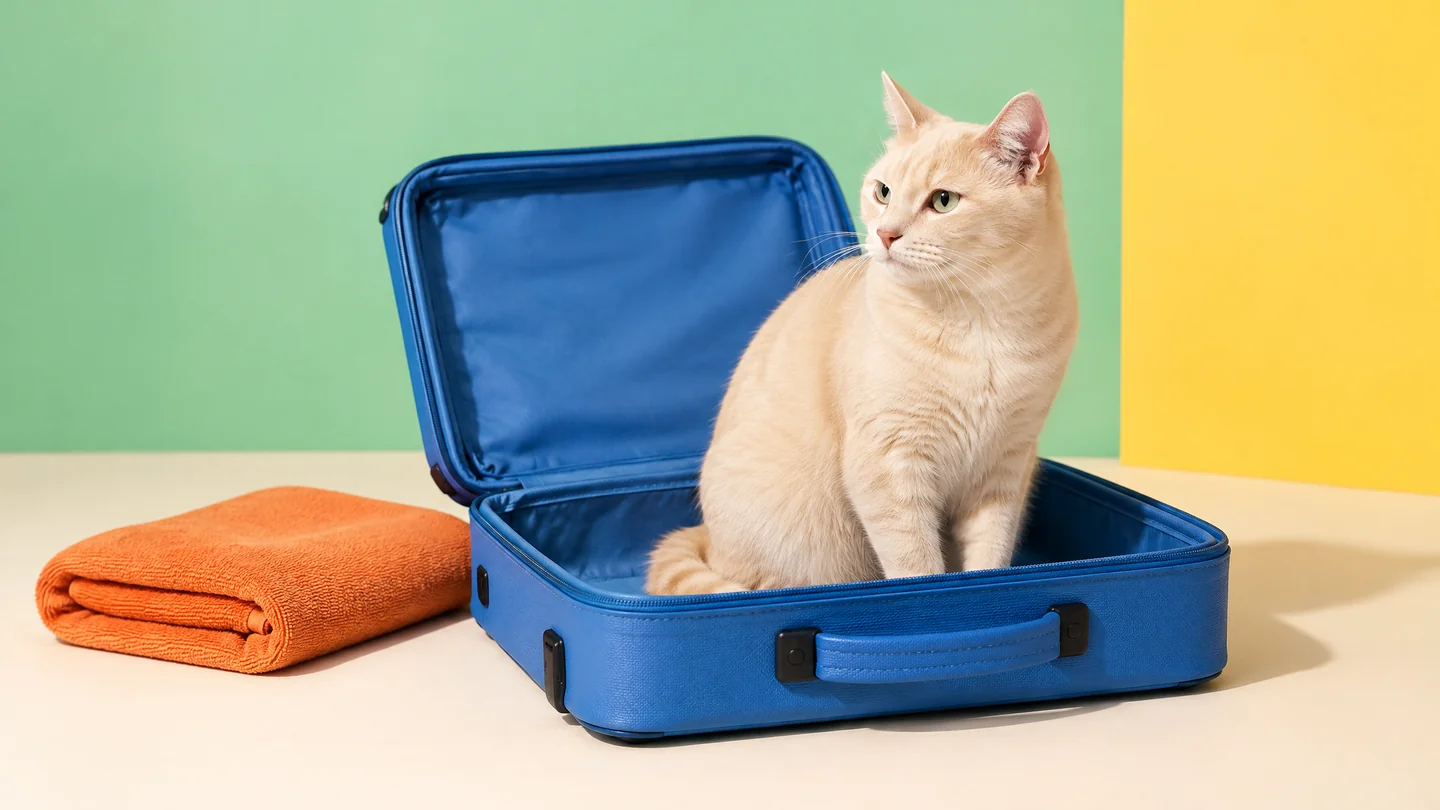
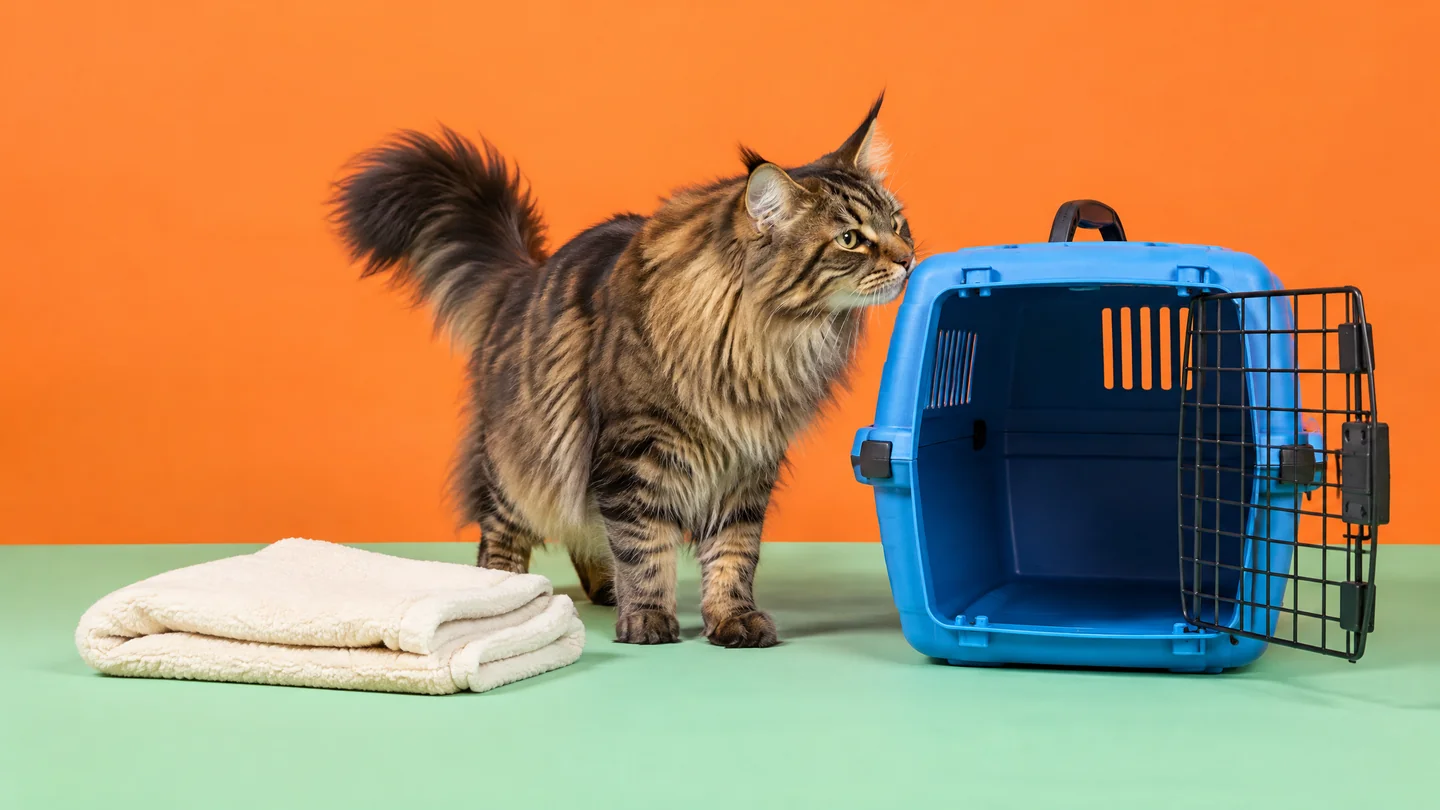
Cat Friendly Homes recommends a sturdy carrier suited to the cat, easy to clean and with useful access openings. Its guidance also encourages leaving the carrier available at home with familiar bedding so it becomes a familiar object. Check the carrier’s fastenings and follow the manufacturer’s transport instructions. A decorative bag or open suitcase is not a substitute.
Ask which familiar items the facility permits. One clearly labelled washable item may be easier to manage than several irreplaceable possessions. Ask about restrictions on stuffing, strings, small detachable pieces and large beds. Photograph what you hand over so you have a simple belongings inventory. The goal is a manageable routine, not reproducing every object in your living room.
Make arrival a short, accurate handover
Confirm the appointment window, parking or entrance instructions, and who is authorised to collect your cat. Keep the carrier secure while waiting and follow staff instructions for the transfer. Ask staff to check the food labels, medication record and contact details while you are present. This is the moment to correct a misunderstanding.
Before leaving, confirm the update schedule, the procedure for extending the stay and the collection arrangements. Save the business’s contact information somewhere you can reach while travelling. When you collect your cat, ask for the care record, medication handover and all belongings. If your plans changed, confirm the revised bill and instructions rather than relying on the original dates.
| Prepare before arrival | Bring on the day |
|---|---|
| Accepted records and booking confirmation | Secure, labelled carrier |
| Food and care instructions | Accepted food in agreed packaging |
| Medication approval and instructions | Original-labelled medicines and requested supplies |
| Emergency and authorised collection contacts | Only permitted familiar belongings |
Your before-you-book checklist.
- Obtain the current cat-specific packing checklist.
- Confirm records were accepted, not just sent.
- Label food and each cat’s belongings clearly.
- Agree medicine packaging and handover times.
- Check the carrier and authorised collection details.
- Photograph the belongings inventory.
Common questions.
Should I bring my cat’s own food?
Ask the provider. Many accept it, but packaging and storage rules vary. Confirm meal quantities and what happens if your return is delayed. Ask about house-food costs even when a boarding page lists food among its amenities.
Do I need to bring litter and bowls?
Only if requested or specifically agreed. Facilities may supply these or have rules for particular products. Ask before packing bulky items, and confirm whether your cat’s established requirements can be accommodated.
When should I send vaccination records?
Use the facility’s deadline and ask it to confirm acceptance. Do this before arrival, especially when there are timing rules. Your veterinarian should advise on vaccination decisions; this checklist does not set a universal schedule.
What vaccines do cats need for boarding?
Obtain the exact facility’s current policy. FVRCP and rabies appear in published requirements, but the rules can differ by business and service. Your veterinarian should advise on vaccination for your individual cat; ask the facility to confirm that the submitted records satisfy its admission rules.
Can my cat board if vaccination paperwork is missing?
Contact the facility and your veterinarian before travelling. Ask whether the veterinarian can provide the required record and whether the business can review it in time. Do not assume admission, or look for a substitute document that does not represent your cat’s actual history.
What should go on the care handover sheet?
Use your cat’s name, agreed feeding instructions, accepted prescribed-care instructions, the last and next administration times where relevant, emergency contacts and the authorised collection person. Keep a copy and have staff resolve anything unclear while you are present.
Find their kind of place.
Explore the rooms and care arrangements, then ask the business about your dates.